


Inflation has risen to 3.1% – its highest rate in five months and well above the Bank of England’s 2% target.
This rise is largely due to the Iran War, which has disrupted global oil trade since late February. Diesel prices have been pushed to over £2 a litre, and higher transport costs are causing food prices to increase.
Inflation rates have climbed steeply in recent years, rising as high as 11.1% in October 2022, according to the Office for National Statistics (ONS), in the aftermath of the Covid-19 pandemic. Rates had been steadily declining since then, but this recent rise only adds to the cumulative impact of inflation on the cost of living since 2020.
Inflation won’t bankrupt you overnight. But rising costs can slowly erode your retirement wealth over time.
Effective planning can help make inflation a problem of the past. Keep reading to learn five strategies to help you beat the cost of living in retirement.
1. Keep your pension wealth invested
Defined contribution pensions, like self-invested personal pensions or your workplace pension, are typically invested rather than being held as cash.
Investing your wealth usually means it will grow faster than inflation, as well as cash alternatives.
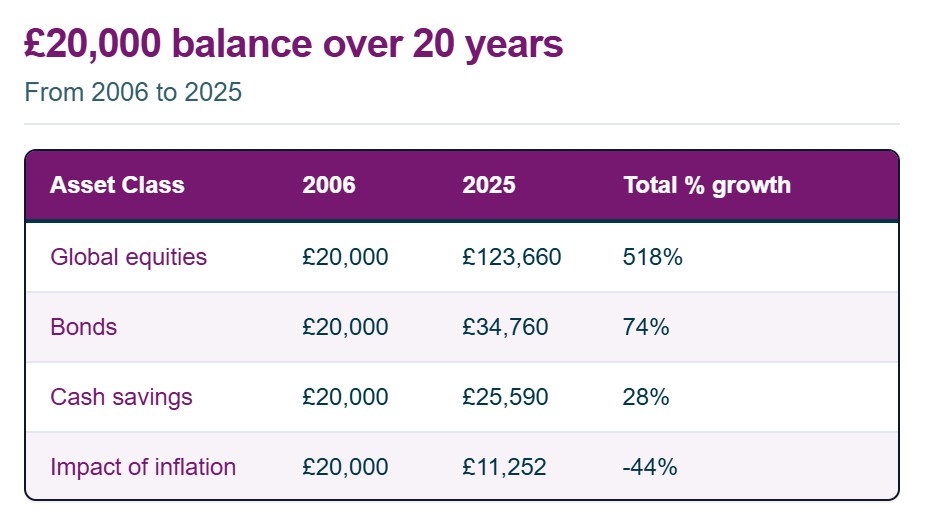
The below table demonstrates how a £20,000 sum would have changed between 2006 and 2025 if it were invested in global equities or bonds or held in a cash savings account, compared with its relative value after inflation.
Source: Barclays
While inflation eroded spending power by approximately 44%, global equities outgrew the rate of inflation substantially. Cash, on the other hand, only grew by about 28%, meaning inflation eroded its gains.
You might be tempted to withdraw a large lump sum from your pension once you retire and keep the funds in cash. But withdrawing only what you need could allow more of your pension to benefit from investment growth and stay protected against inflation.
Remember, keeping your pension wealth invested until you need to spend it does not guarantee it will beat inflation rates. Markets can rise and fall in value, and your wealth is at risk of volatility and short-term losses.
However, as a long-term investment asset, your pension is designed to weather short-term losses. Risk can also be mitigated using diversification. An effective withdrawal strategy can help you continue to benefit from compound growth while creating sustainable retirement income.
2. Hold cash in high-interest savings accounts
Cash savings accounts benefit from interest rates that help you grow your money over time.
However, as we’ve mentioned above, cash interest normally offers less than investment growth over the long term. Fidelity reports that the S&P 500’s average annual returns have been approximately 10% since it was launched in 1957. By comparison, the best average easy access cash savings account typically provides interest rates of 5%.
Still, a cash supply is necessary to help you cover immediate costs, short-term needs, and your emergency fund.
Therefore, it’s important that you choose a savings account with an interest rate that beats inflation, which is 3.1% in the 12 months up to August 2026 according to recent ONS figures. Otherwise, the value of your cash savings will erode over time.
Higher-interest accounts can come with rigid clauses, such as:
- A limit on the number of times you can access your cash savings a year
- Minimum and maximum deposit limits
- Early withdrawal fees.
Make sure you’re aware of the terms before you commit.
3. Make sure your retirement income is tax-efficient
Alongside compound growth, it is important to focus on tax efficiency in retirement. Taking advantage of certain allowances and reliefs can help you build more wealth that beats what you could lose due to inflation.
Once you start withdrawing from your pension, you have access to a 25% tax-free lump sum, which you can:
- Take all at once
- Spread across multiple withdrawals.
The remainder of your pension is subject to your marginal rate of Income Tax, which benefits from your Personal Allowance entitlement (£12,570 for the 2026/27 tax year).
You might also use your pension withdrawals alongside wealth from other tax wrappers, like ISAs, which pay out interest, dividends, and profits free from Income Tax, Capital Gains Tax, and Dividend Tax.
Your financial planner can help you strategically use your retirement income sources to make your wealth tax-efficient.
4. Buy an inflation-linked annuity
An annuity is a financial product which converts some or all of your pension pot into guaranteed, regular income for life or a fixed period of time.
Annuities come in different shapes and sizes, such as an inflation-linked annuity. This ensures that the regular income you receive increases in line with inflation.
However, annuities do carry downsides, including:
- Your wealth will no longer be invested and won’t benefit from compound growth.
- The decision is usually irreversible.
- An annuity is only cost-effective if you live long enough to fully enjoy the benefits.
- You might not be able to pass on remaining annuity wealth to your loved ones after you die.
Make sure you think carefully before deciding whether an annuity is right for you. A financial planner can help.
5. Speak to us
If you’re concerned about how rising inflation could impact your wellbeing in retirement, reach out to a member of our team today.
We can help you find security and peace of mind about inflation using tailored strategies.
Email us at [email protected], or call 01273 076 587.
Please note
This article is for general information only and does not constitute advice. The information is aimed at individuals only.
All information is correct at the time of writing and is subject to change in the future.
Please do not act based on anything you might read in this article. All contents are based on our understanding of HMRC legislation, which is subject to change.
The Financial Conduct Authority does not regulate tax planning.
The value of your investments (and any income from them) can go down as well as up and you may not get back the full amount you invested. Past performance is not a reliable indicator of future performance.
Investments should be considered over the longer term and should fit in with your overall attitude to risk and financial circumstances.
A pension is a long-term investment not normally accessible until 55 (57 from April 2028). The fund value may fluctuate and can go down, which would have an impact on the level of pension benefits available.
The tax implications of pension withdrawals will be based on your individual circumstances. Thresholds, percentage rates, and tax legislation may change in subsequent Finance Acts.