


In physics, four fundamental forces guide our understanding of how the universe, the world, and humans work: the strong and weak nuclear forces, gravity, and electromagnetism.
For decades, scientists have tried to unify these forces into a single framework: a Theory of Everything. Doing so could help us learn what happens inside black holes, explain the Big Bang, and connect the smallest subatomic particles to the largest stars in the universe.
Unfortunately, this has yet to be accomplished, and much of physics still remains a mystery. But things are much clearer when it comes to your personal finances.
Four fundamental forces impact your wealth: tax, risk, time, and emotion. Your financial plan unites all four – its own Theory of Everything – to help your wealth reach its maximum potential.
Keep reading to learn more about these forces and how your financial plan achieves harmony with each.
1. Tax
Taxes have social value, but – especially if you have a complex set of assets – they can erode your personal wealth and slow your progress towards your goals.
In some cases, the tax you pay could be reduced by leveraging certain allowances, reliefs, and rules.
For example, your pension contributions benefit from tax relief based on the level of Income Tax you pay.
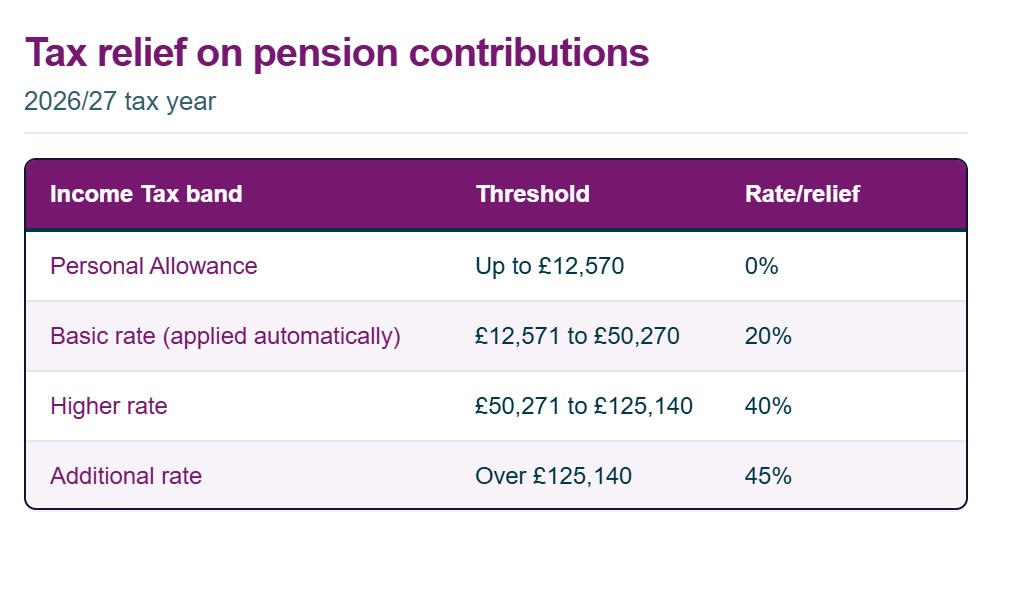 While 20% relief applies at source, you have to claim higher and additional rates directly from HMRC using Self Assessment.
Your financial plan identifies what relief you are eligible for and incorporates additional savings into your long-term strategy. This ensures your wealth is tax-efficient – reducing the burden of taxes on your income, savings, and investments to help you achieve your goals more effectively.
2. Risk
Most financial decisions come with an element of risk. For example, when you buy a home, you take on risk by agreeing to pay off your mortgage debt within a certain time frame.
Investing via your pension or another account carries a risk too – you could lose money – but it also provides the opportunity for your wealth to outpace inflation, as our recent article explains.
As a rule of thumb, the more risk you take, the greater potential your wealth has to grow. However, too much risk could mean your money is vulnerable to events outside your control.
Risk plays a substantial role in investing. The value of your investment hinges on global market movements, which are unpredictable. Therefore, how you organise your investments in your portfolio, pension, or ISA determines how much of your wealth is exposed.
For example, if you choose a portfolio consisting entirely of equities, this could be considered high-risk.
Alternatively, a diversified portfolio spreads investments across various asset classes, locations, and markets. This means that if one area of your portfolio were exposed to volatility – suddenly increasing or decreasing in value – your other investments could remain stable.
Your financial plan aligns your attitude to risk with your invested wealth and adapts throughout your life. This means that your risk tolerance will always be aligned with your changing expectations.
3. Time
Time is the primary mechanism by which your wealth grows; the longer you regularly save and invest, the more wealth you can build.
Likewise, the longer you invest for, the more opportunity your wealth has to benefit from compound growth – the returns from your contributions and their profits. The same applies to cash savings, which can accrue compound interest.
Your financial plan helps you build wealth towards your objectives over the long term. It also uses tools like cashflow modelling to map out how your wealth will change over time. This can help you form financial objectives and develop your regular savings plan.
Cashflow modelling can also help you focus on your long-term goals and give your plan the time it needs to work.
When markets become volatile (as they regularly do), you might feel tempted to sell your investments to avoid further losses. Focusing on your potential long-term gains visualised through cashflow modelling can encourage you to hold on to your investments, meaning you avoid solidifying your losses and give your wealth the chance to rebound with the market.
4. Emotion
The choices you make, dictated by logic and emotion, have the biggest impact on your wealth.
Good decisions, such as setting up an estate plan to protect your family after you’re gone, can be driven by a healthy combination of emotion and logic. However, emotional decision-making can sometimes work against your interests, particularly when it causes knee-jerk reactions to short-term problems.
For instance, when markets are volatile or new tax policies are rumoured, these topics can dominate news cycles, with headlines using emotional language in competition for your attention.
Headlines can be alarmist or give disproportionate representation to opinion-based issues. In either scenario, you could be encouraged to make an irreversible decision about your wealth that slows down your progress.
Your financial plan focuses on your goals and wishes while stress-testing your decisions against hard data.
As a long-term framework, your plan is designed to be hands-off, using strategy and automation to build your wealth. This discourages you from micromanaging your personal wealth so that short-term events are less likely to derail your plans.
Likewise, if you are at risk of making decisions based on emotion, you can speak to your financial planner, who can help you judge whether you have reason to be concerned.
Get in touch
Find out how we can harness the fundamental forces of your financial plan to help you achieve more with your wealth by speaking to a member of our team.
Email us at [email protected], or call 01273 076 587 today.
Please note
This article is for general information only and does not constitute advice. The information is aimed at individuals only.
All information is correct at the time of writing and is subject to change in the future.
Please do not act based on anything you might read in this article. All contents are based on our understanding of HMRC legislation, which is subject to change.
The Financial Conduct Authority does not regulate cashflow planning or tax planning.
A pension is a long-term investment not normally accessible until 55 (57 from April 2028). The fund value may fluctuate and can go down, which would have an impact on the level of pension benefits available.
The tax implications of pension withdrawals will be based on your individual circumstances. Thresholds, percentage rates, and tax legislation may change in subsequent Finance Acts.
The value of your investments (and any income from them) can go down as well as up and you may not get back the full amount you invested. Past performance is not a reliable indicator of future performance.
Investments should be considered over the longer term and should fit in with your overall attitude to risk and financial circumstances.